Every Stage Is a World of Its Own
Child development is not a race. It is not a competition. And it is certainly not a process that unfolds on a fixed schedule identical for every child. Yet parents — understandably — often feel pressure to know whether their child is "on track," whether they're doing enough, whether the environment they've chosen is the right one.
At Blue Planet Child Care in downtown Calgary, we want to take that pressure off the table and replace it with something more useful: a clear picture of what healthy, supported development actually looks like at each stage, and how we intentionally nurture it.
The foundational insight here comes from developmental psychologist Lev Vygotsky, whose concept of the "Zone of Proximal Development" (1978) describes the space between what a child can do independently and what they can achieve with gentle guidance. Our role as educators is not to push children beyond that zone, but to work within it — offering just enough support to move each child forward at their own pace, in their own way.
Blue Planet is not simply a place where children are cared for while parents work. It is an environment where every developmental stage is treated as a distinct and precious period — irreplaceable, irreversible, and full of specific opportunity.
Stage 1: Toddler Group (19 Months to 3 Years)
Tiny Steps, Giant Discoveries
Between 19 months and 3 years, children are engaged in one of the most rapid and remarkable developmental surges of human life. Language acquisition is exploding. Gross and fine motor skills are consolidating. A sense of individual selfhood — separate from parents and caregivers — is beginning to emerge. And emotions, enormous and not yet fully understood even by the child experiencing them, are running very close to the surface.
What toddlers need most during this period is not structured instruction. It is safety, warmth, consistency, and the freedom to explore within loving boundaries. Research by Mary Ainsworth on attachment theory (1978) established definitively that a child's ability to learn and explore is directly dependent on the security of their attachment to a primary caregiver. In a childcare context, this means that the relationship between a toddler and their educator is not incidental to learning — it is the prerequisite for it.
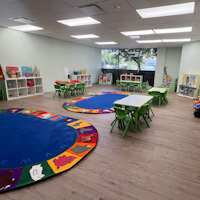
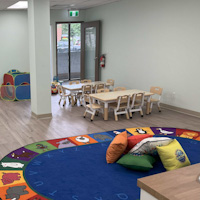
At Blue Planet, our Toddler Group maintains a maximum of 12 children — a deliberate structural choice that allows each child to receive genuine individual attention. Our educators take the time to learn each toddler's rhythms, triggers, preferences, and communication style before anything else.
We place particular emphasis on supporting the transition from home. The first separation from a parent is one of the most emotionally significant experiences a toddler will have. We don't rush it, minimize it, or treat it as a logistical problem to be managed. We treat it as what it is: a major emotional milestone that deserves patience, attunement, and time.
Play is the curriculum at this stage — and the research unanimously supports this. A toddler building a tower, filling a container with sand, or listening to a song repeated for the tenth time is doing genuine cognitive work: developing spatial reasoning, cause-and-effect thinking, language processing, and the early seeds of mathematical understanding.
We begin cultivating 21st century skills here too — not explicitly, but organically. A toddler who learns to wait for a turn is developing impulse regulation. A toddler who figures out how to stack three blocks without them falling is problem-solving. These are not trivial accomplishments. They are early expressions of the thinking capacities that matter most in the world your child will grow into.
Stage 2: Preschooler Group (3–4 Years)
Ready to Reach Further
By age three, significant developmental thresholds have been crossed. Children in this group are capable of following multi-step instructions, engaging in intentional peer interaction, and sustaining attention on activities that genuinely interest them. They are ready for richer content — and they are hungry for it.
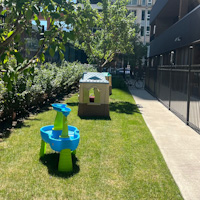
Our Preschooler Group for 3 to 4-year-olds at Blue Planet is designed to honor that readiness without rushing it. Sessions begin with gross motor movement — active games, dance, outdoor exploration — because the neuroscientific evidence is clear: physical activity activates the prefrontal cortex and prepares the brain for focused cognitive engagement. Ratey and Hagerman's work in Spark: The Revolutionary New Science of Exercise and the Brain (2008) demonstrated that movement is not a break from learning. It is the biological preparation for it.
Following movement, children engage in activities that develop critical thinking, problem-solving, and creative expression. Our curriculum is guided by Bloom's Taxonomy — a hierarchical framework of cognitive goals developed by Benjamin Bloom (1956) that ensures children are not simply receiving information, but engaging with it at progressively deeper levels: understanding, applying, analyzing, evaluating, and creating.
In a nature-themed activity, for example, children might identify different types of leaves (knowledge), sort them by shape (understanding), use them to create a collage (application and creation), and then explain their artwork to a peer (evaluation and communication). This is not busywork. This is deep, developmentally appropriate cognitive engagement.
Music is introduced through the Orff method — an approach that treats music as a natural human language accessible to all children regardless of background or ability. Children don't listen to music at Blue Planet. They make it, move to it, and experience it as a form of creative self-expression and communication.
Emotional development is woven throughout every session. Children at this age are beginning to recognize and name their emotional states, understand that others have feelings different from their own, and navigate the social complexity of group life. We guide this process with warmth and intention, never punishing emotional expression but always supporting children in understanding and managing what they feel.
Stage 3: Junior Kindergarten (4–5 Years)
Building the Whole Person for a Complex World
Junior Kindergarten marks the most intellectually expansive stage of our program — and the most deliberate in its preparation for formal schooling and life beyond it. Four and five-year-olds are capable of sustained inquiry, collaborative problem-solving, narrative thinking, and beginning abstract reasoning. Our JK program is designed to cultivate all of these capacities — and to do so joyfully.
The curriculum in JK is explicitly organized around 21st century skill development. We are no longer in an era where the goal of education is knowledge transmission. We are in an era — documented extensively by researchers like Ken Robinson in Out of Our Minds: Learning to Be Creative (2011) — where creativity, critical thinking, collaboration, and communication are the competencies that will define a person's capacity to contribute and thrive. These are the skills we build in Junior Kindergarten.
Science activities develop curiosity and the habit of inquiry. Drama builds narrative intelligence, empathy, and the ability to inhabit perspectives beyond one's own. Mathematics is introduced through concrete, playful exploration that develops pattern recognition and logical thinking. Physical education supports not only motor development but the social skills of teamwork, fair play, and resilience.
Coding is introduced in JK — not to produce programmers, but to develop sequencing, logical reasoning, and the foundational understanding that complex outcomes are produced by structured, intentional steps. In a world increasingly shaped by algorithmic thinking, these cognitive habits have genuine long-term value.
Throughout all of this, emotional attunement remains central. Our JK educators observe children carefully, respond to their emotional states, and maintain the consistent warmth and safety that allows children to take intellectual risks and engage with new challenges without fear of failure.
The One Comparison That Matters
Across all three stages at Blue Planet, there is one thing you will never see: children being compared to each other. We do not measure your child against a peer, a sibling, or a national average. The only question we ask is this: compared to where this child was when they arrived, where are they now?
Every child has their own developmental timeline. Every child has their own constellation of strengths, sensitivities, and learning preferences. Piaget's foundational research established that children cannot be meaningfully accelerated through developmental stages — they must move through each one in their own time, consolidating each experience before building upon it.
When you choose Blue Planet, you are choosing an environment that sees your child as an individual. Not a benchmark. Not a comparison point. A unique, bright, irreplaceable person doing the most important developmental work of their life.
We walk alongside them. At their pace. Every step.
Explore our programs or join our waitlist at blueplanetchildcare.ca.
📚 Academic References:
- Vygotsky, L. S. (1978). Mind in Society: The Development of Higher Psychological Processes. Harvard University Press.
- Ainsworth, M. D. S. (1978). Patterns of Attachment. Erlbaum.
- Bloom, B. S. (1956). Taxonomy of Educational Objectives. David McKay Company.
- Ratey, J. J., & Hagerman, E. (2008). Spark: The Revolutionary New Science of Exercise and the Brain. Little, Brown and Company.
- Robinson, K. (2011). Out of Our Minds: Learning to Be Creative. Capstone.
- Piaget, J. (1952). The Origins of Intelligence in Children. International Universities Press.